
The Retie Landscape Objects, located in the province of Antwerp, are designed to enhance the quality and identity of the walking area along the meandering canal east of the Belgian municipality of Retie. Drawing on the region’s rich agricultural history, Serge Schoemaker Architects translated the landscape’s characteristics into a poetic and minimalist design language.
The municipality of Retie sought an overall concept that would enhance the identity and attractiveness of the walking area. Over recent decades, agricultural development around the nineteenth-century canal has shaped an open landscape that is unique within the Kempense Heuvelrug nature area. Distinctive features include the pronounced parcel structure and the network of waterways that define the terrain.
…
The Retie Landscape Objects, located in the province of Antwerp, are designed to enhance the quality and identity of the walking area along the meandering canal east of the Belgian municipality of Retie. Drawing on the region’s rich agricultural history, Serge Schoemaker Architects translated the landscape’s characteristics into a poetic and minimalist design language.
The municipality of Retie sought an overall concept that would enhance the identity and attractiveness of the walking area. Over recent decades, agricultural development around the nineteenth-century canal has shaped an open landscape that is unique within the Kempense Heuvelrug nature area. Distinctive features include the pronounced parcel structure and the network of waterways that define the terrain.
Our winning competition proposal is both poetic and functional. The design comprises six information pillars and three landscape art objects, all constructed from coated sheet steel. Each element tells a specific story related to the agricultural history of the site. While each object is distinct, their restrained form language and characteristic colouring unite them into a clearly recognisable family.
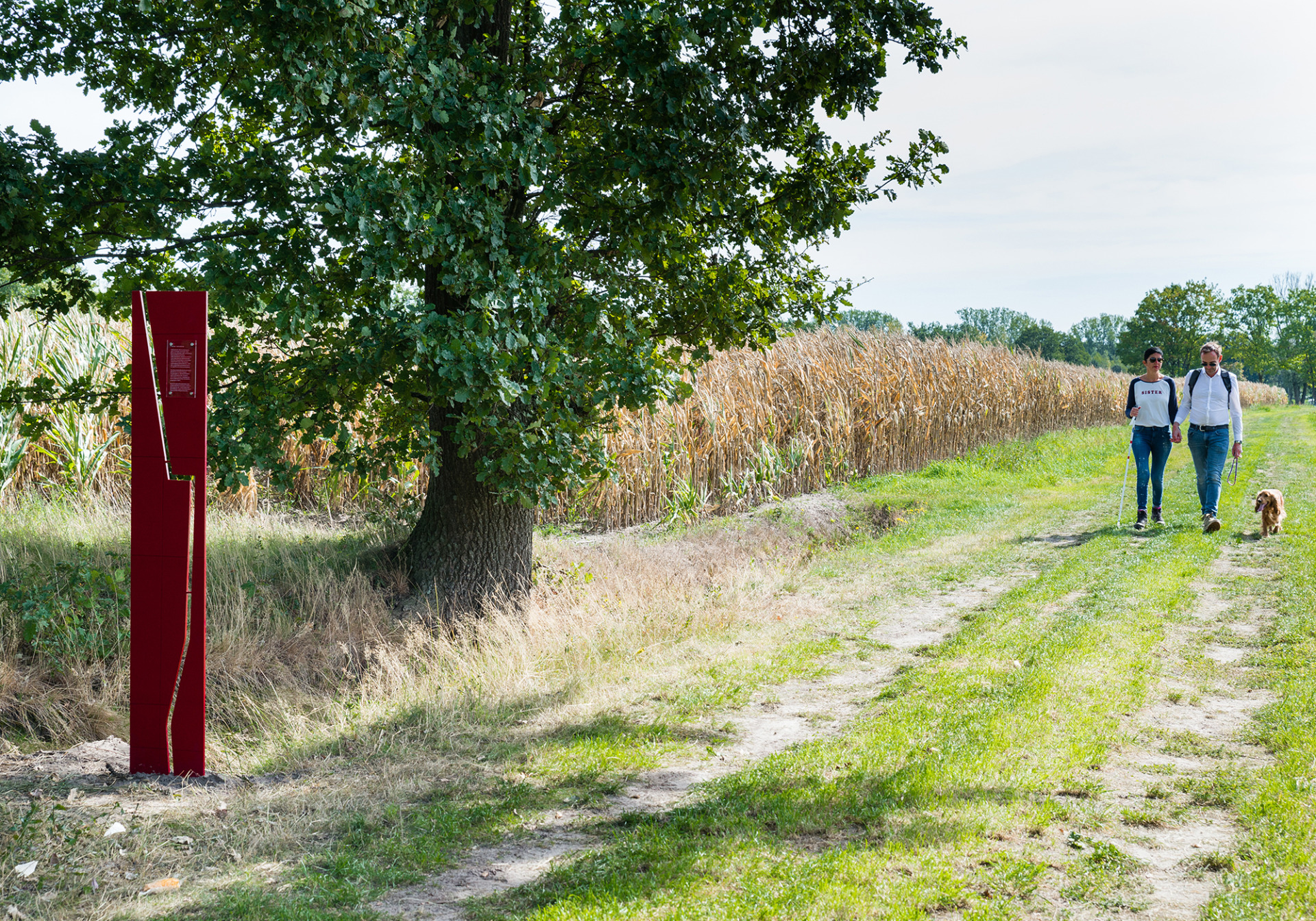
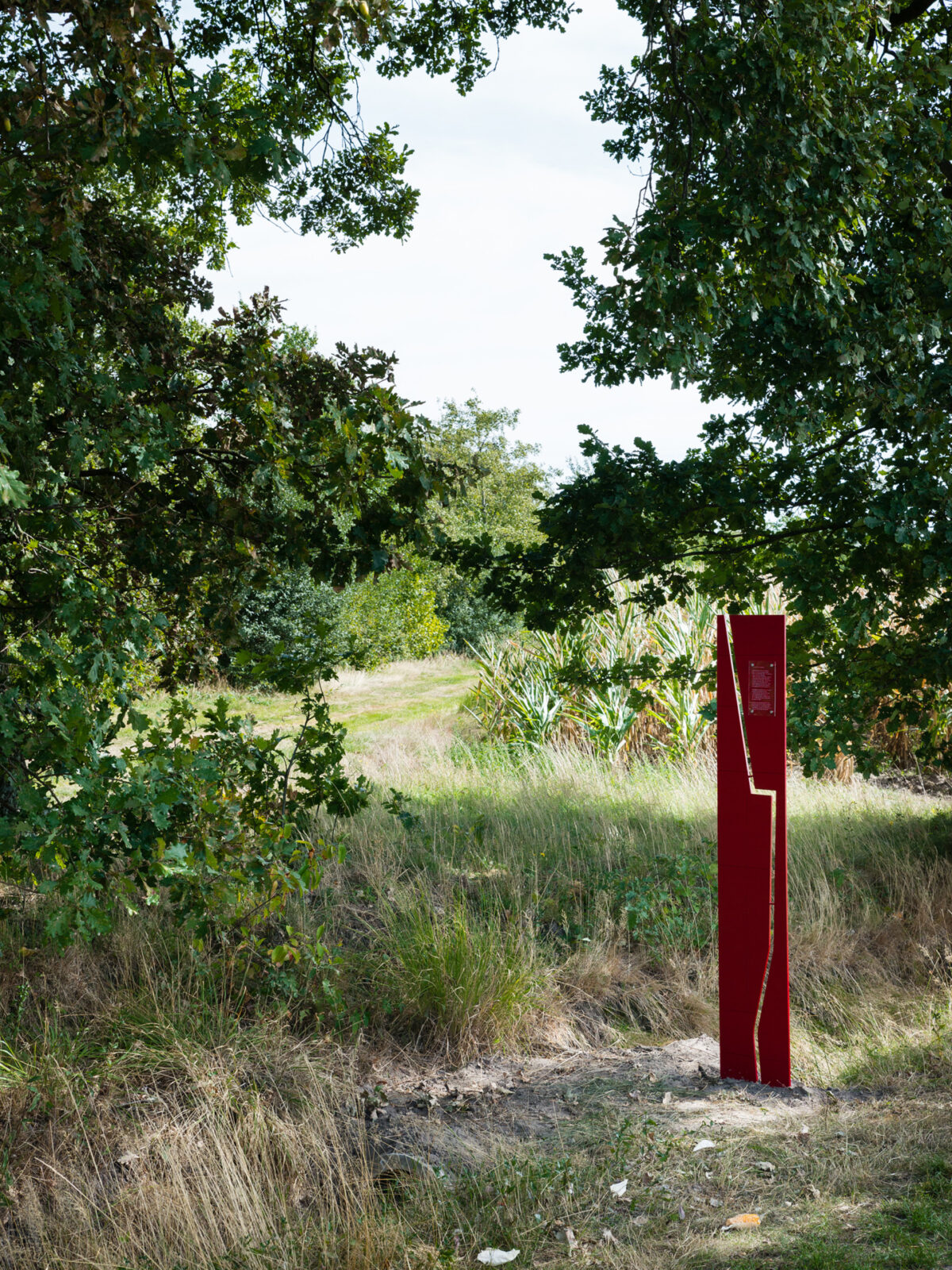
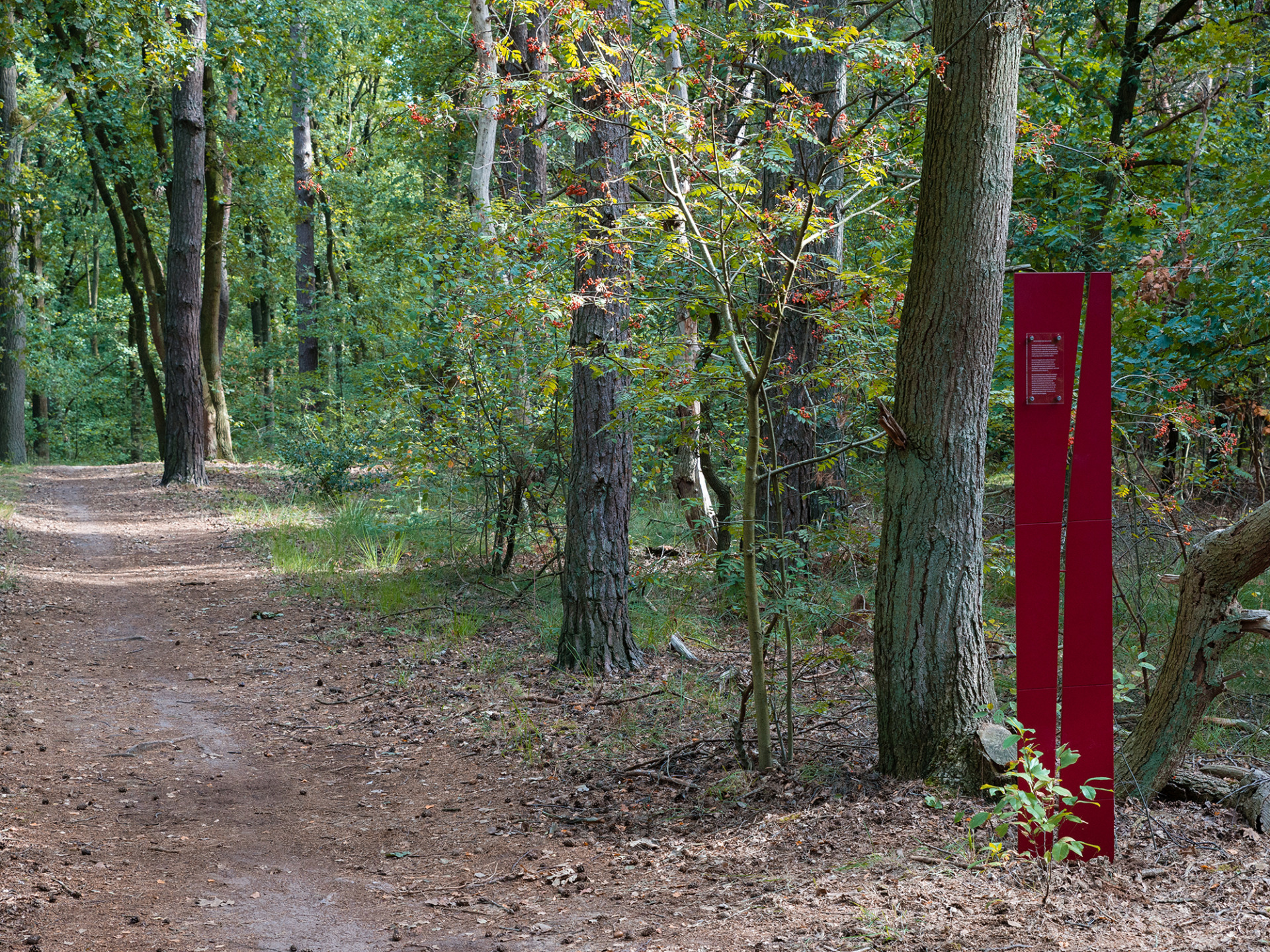
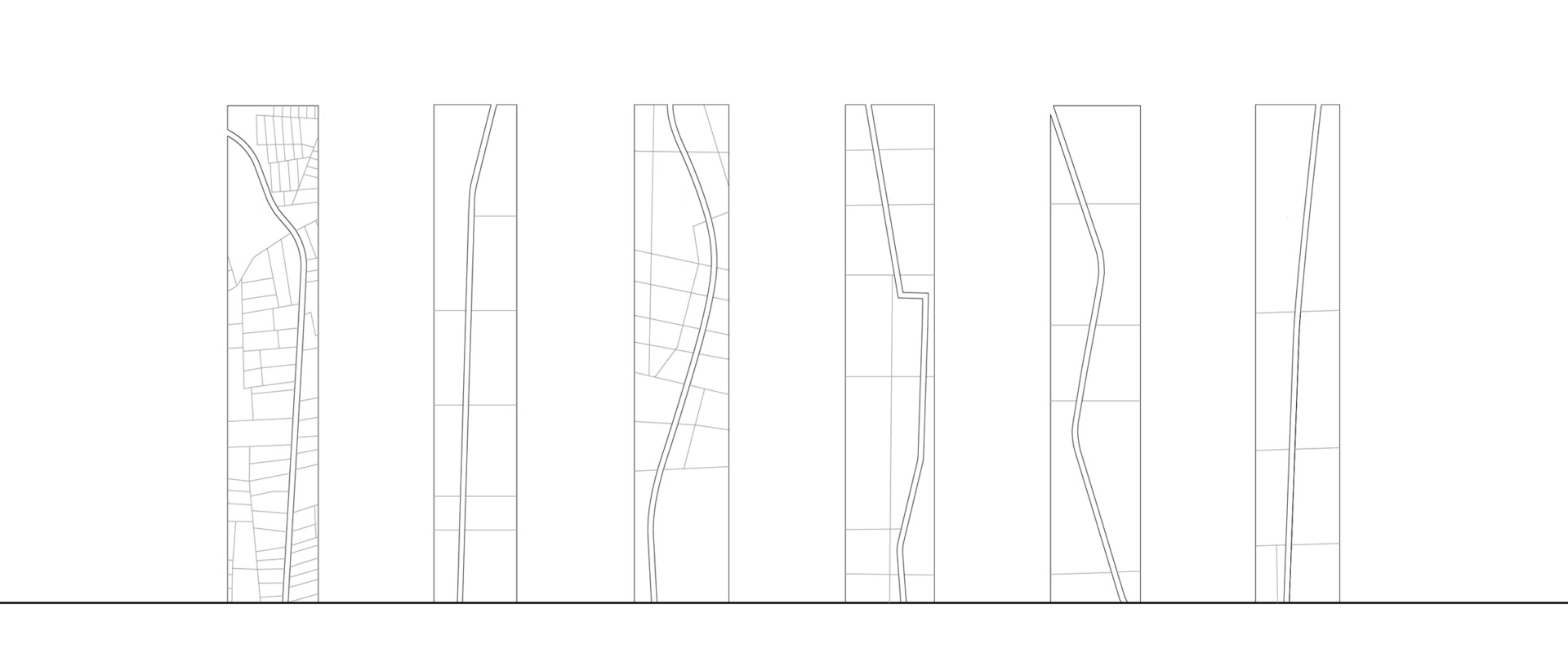
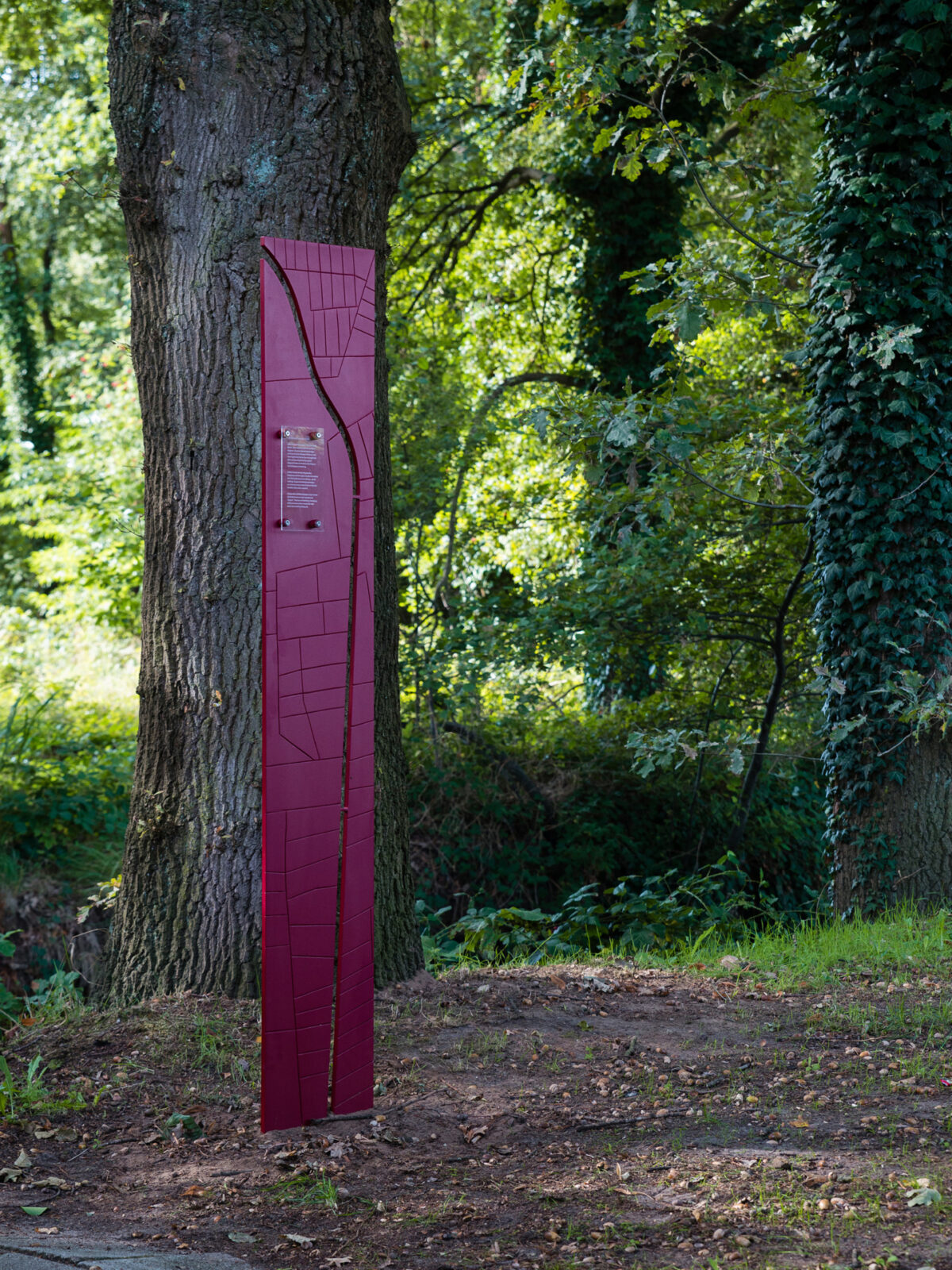
The six information pillars consist of life-sized ‘map fragments’ placed vertically in the landscape. These abstracted maps illustrate the contrast between the orthogonal agricultural plots and the organically meandering streams. Accompanying texts explain the agricultural development of the area and introduce elements of the local Retie dialect.
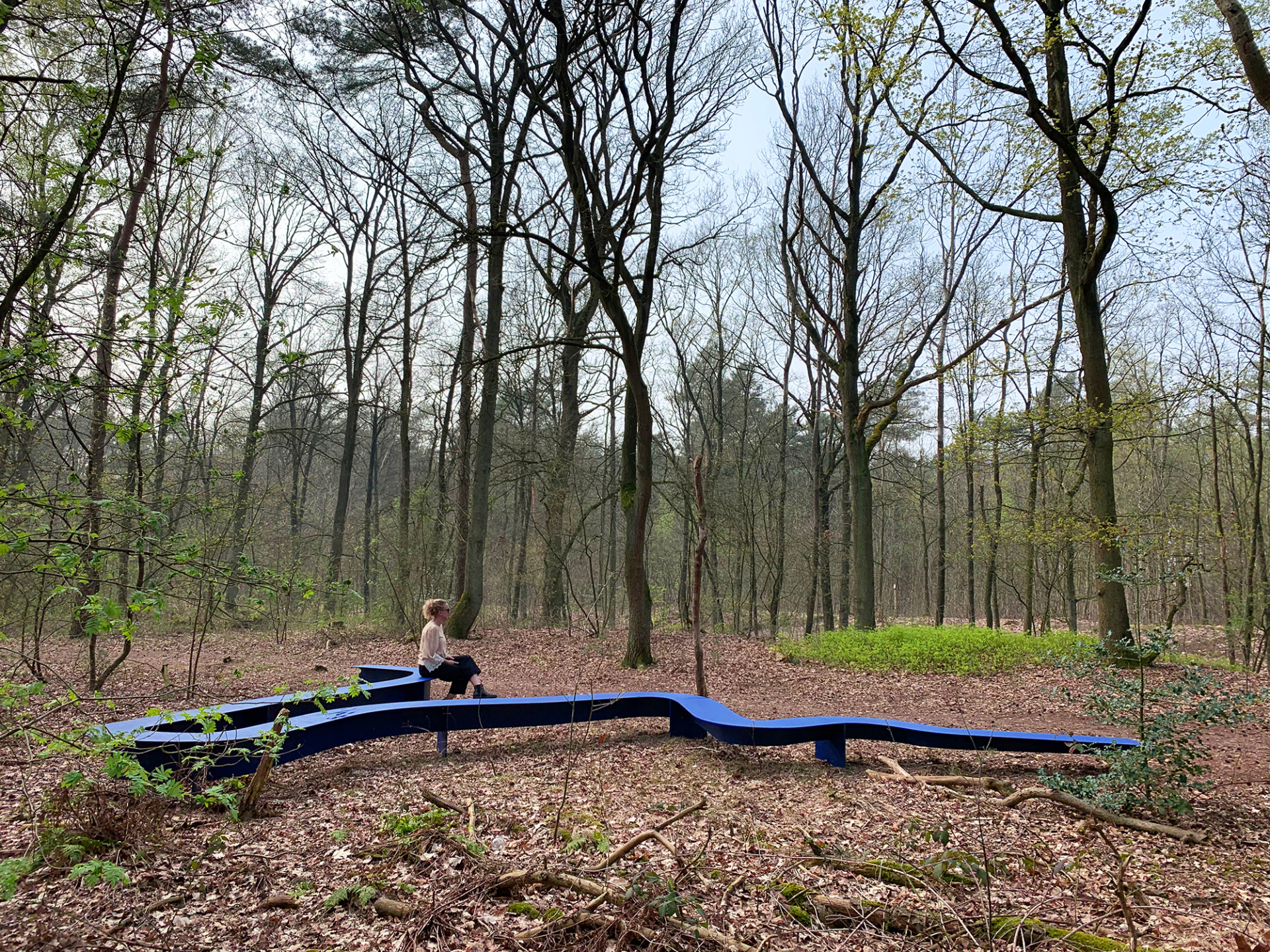
The large canal itself inspired the design of a sinuous landscape element titled The Bench. This sixteen-metre-long seating object follows the same meandering geometry as the drainage canal that runs through the site. Its tapered steel frame subtly refers to the increasing height difference between the sloping landscape and the waterway.
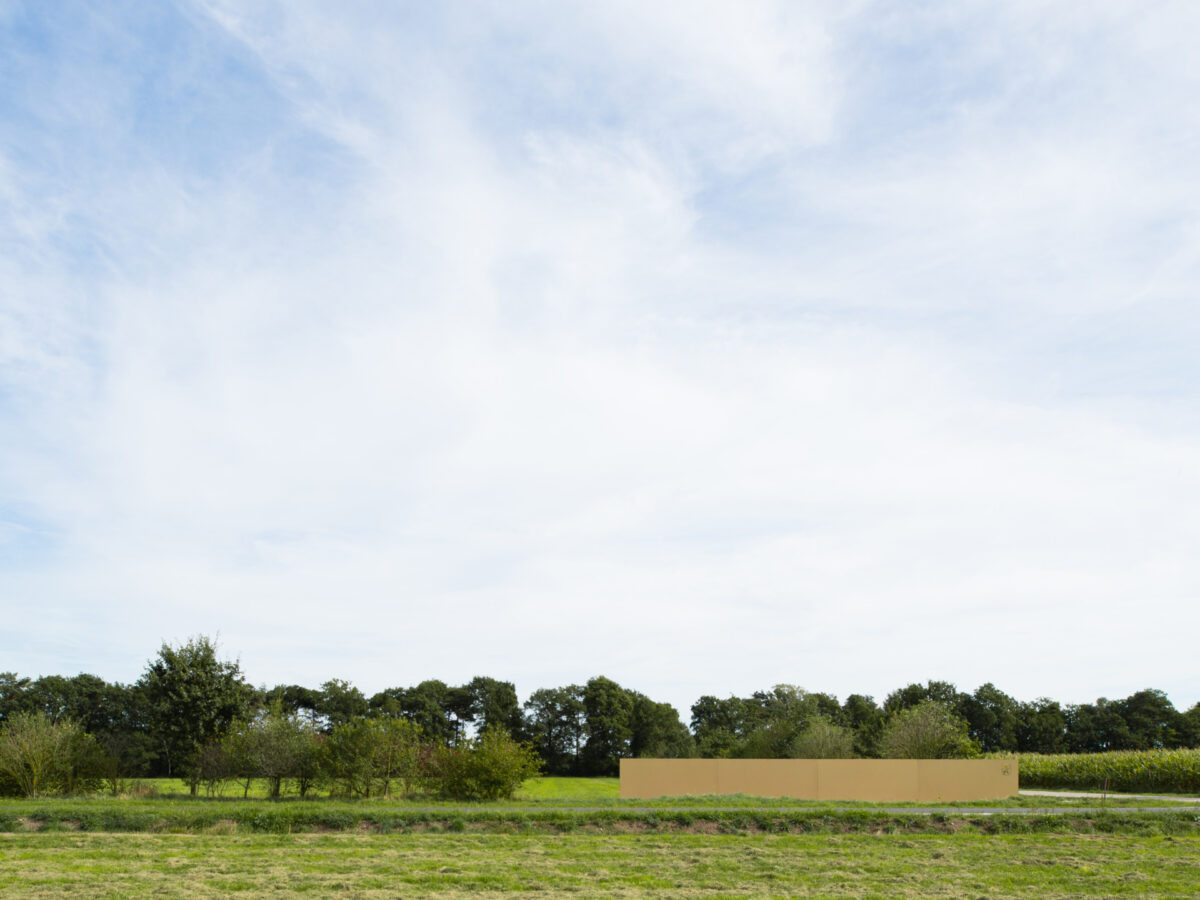
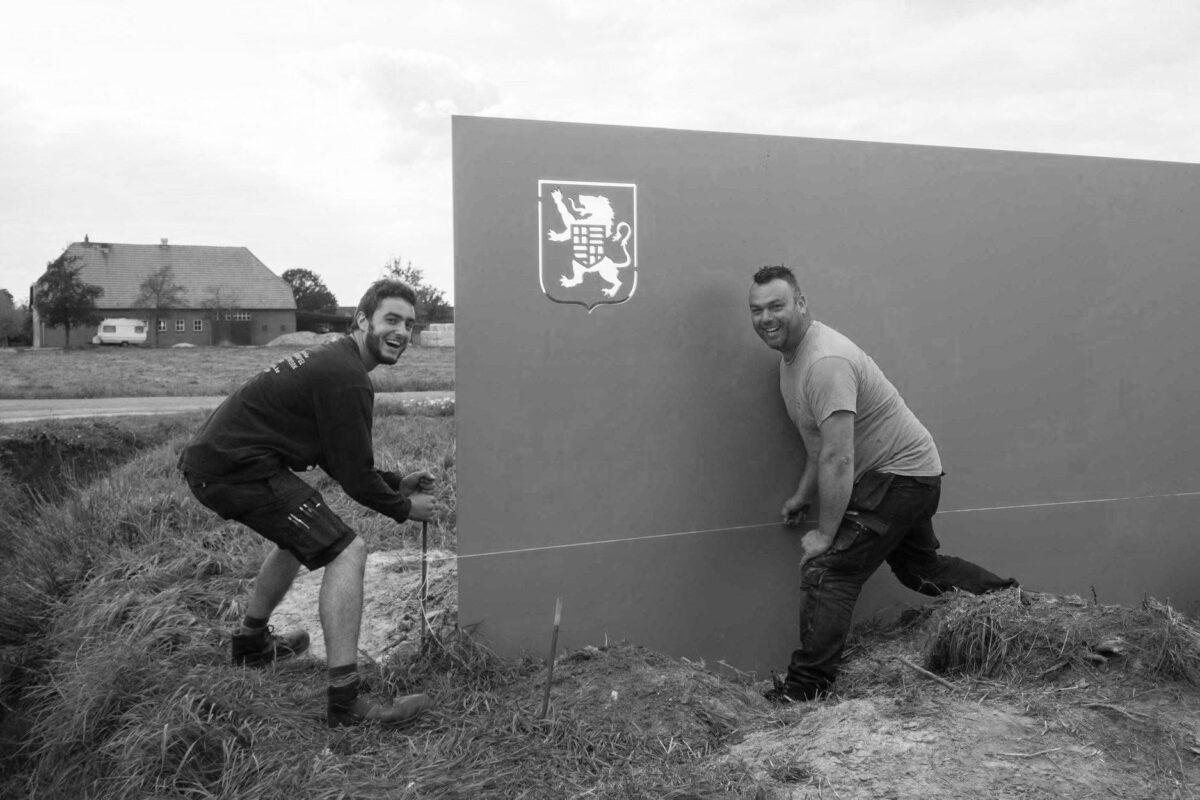
A second linear element, The Wall, makes a formerly invisible boundary legible once more: the historic edge of the Royal Demesne. Between 1853 and 1950, this land belonged to King Leopold I and his son, Count Philippe of Flanders. Along this former boundary, a low wall is placed in the landscape, engraved with the personal coat of arms of King Leopold I.
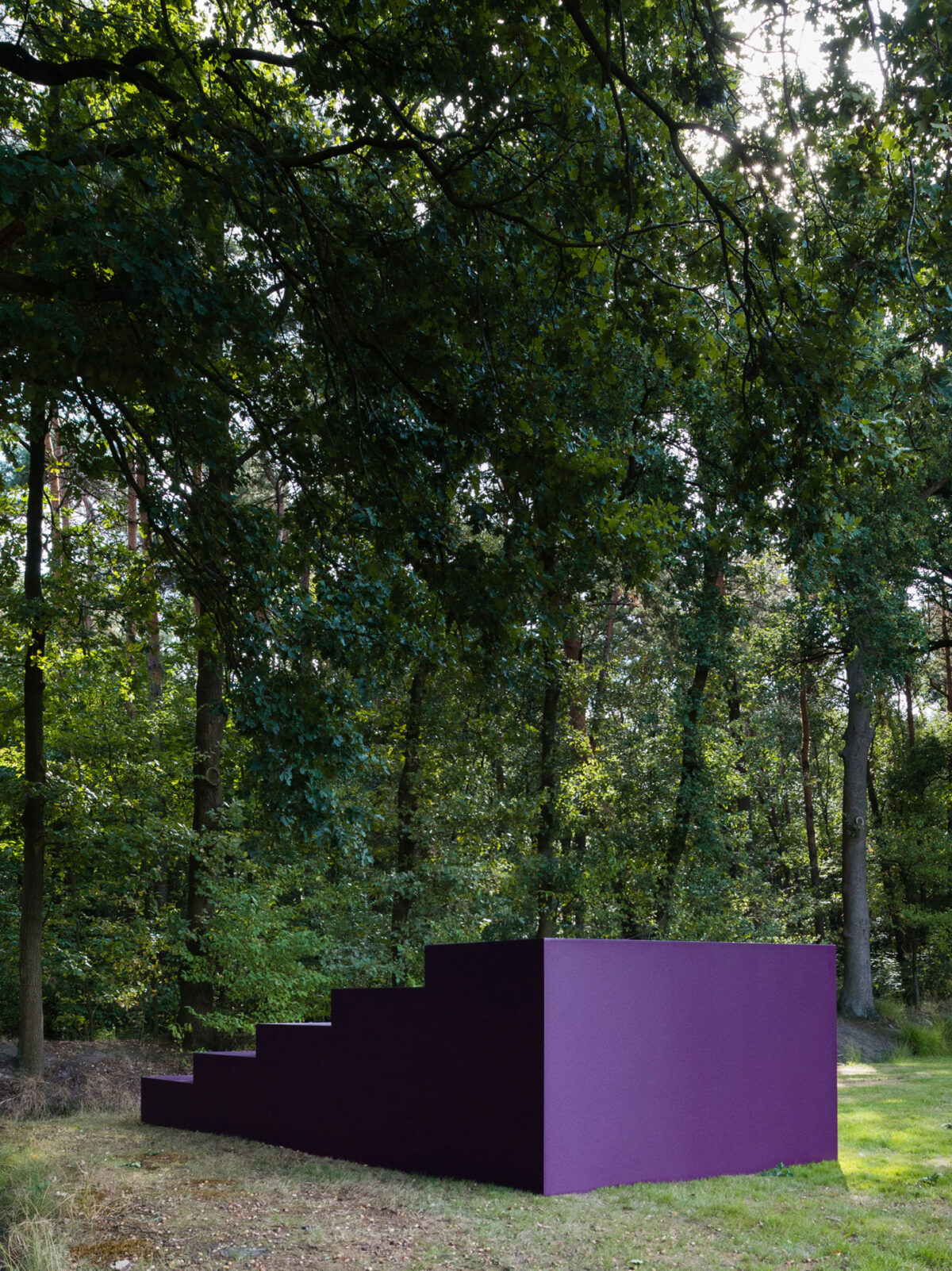
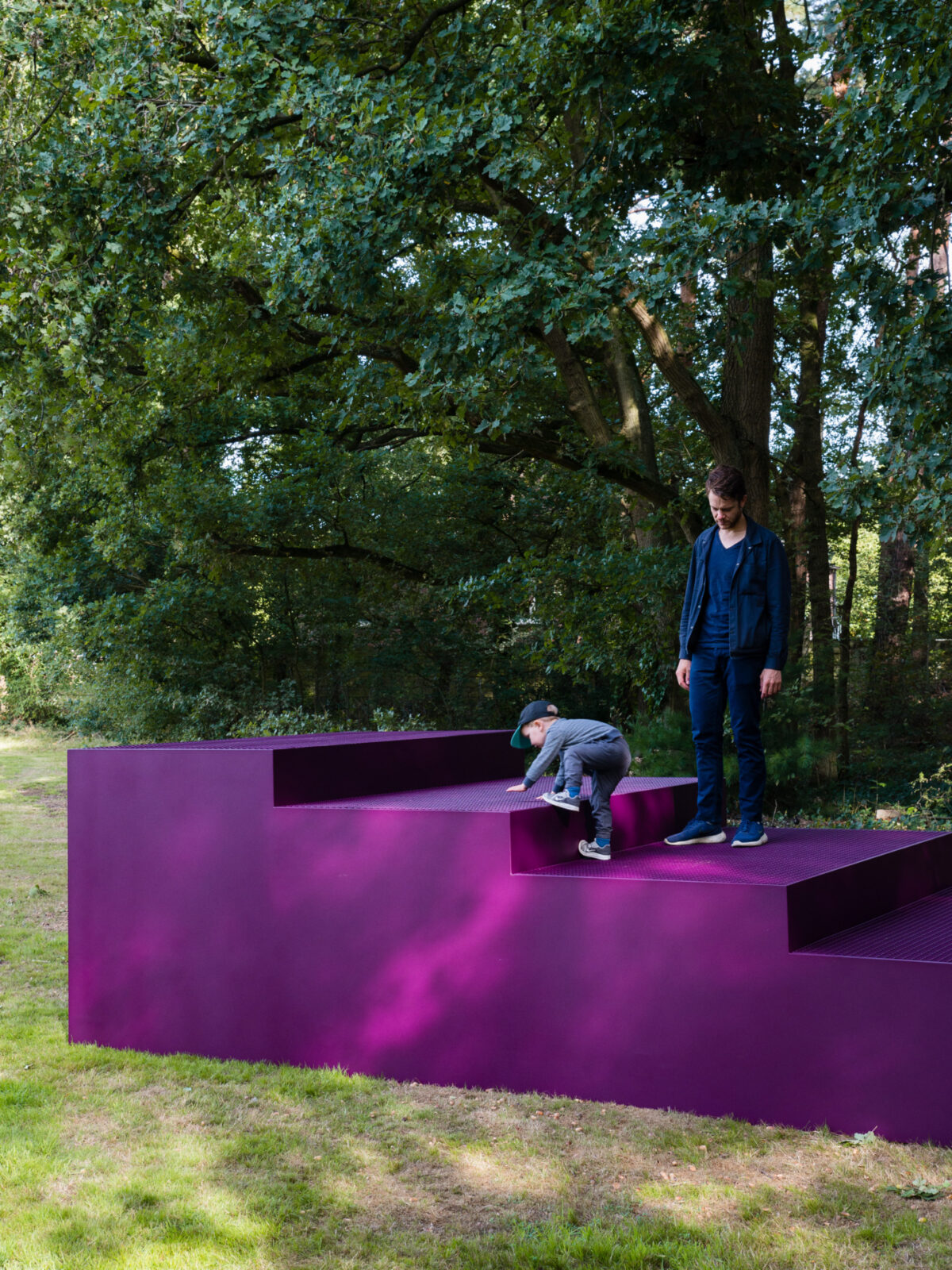
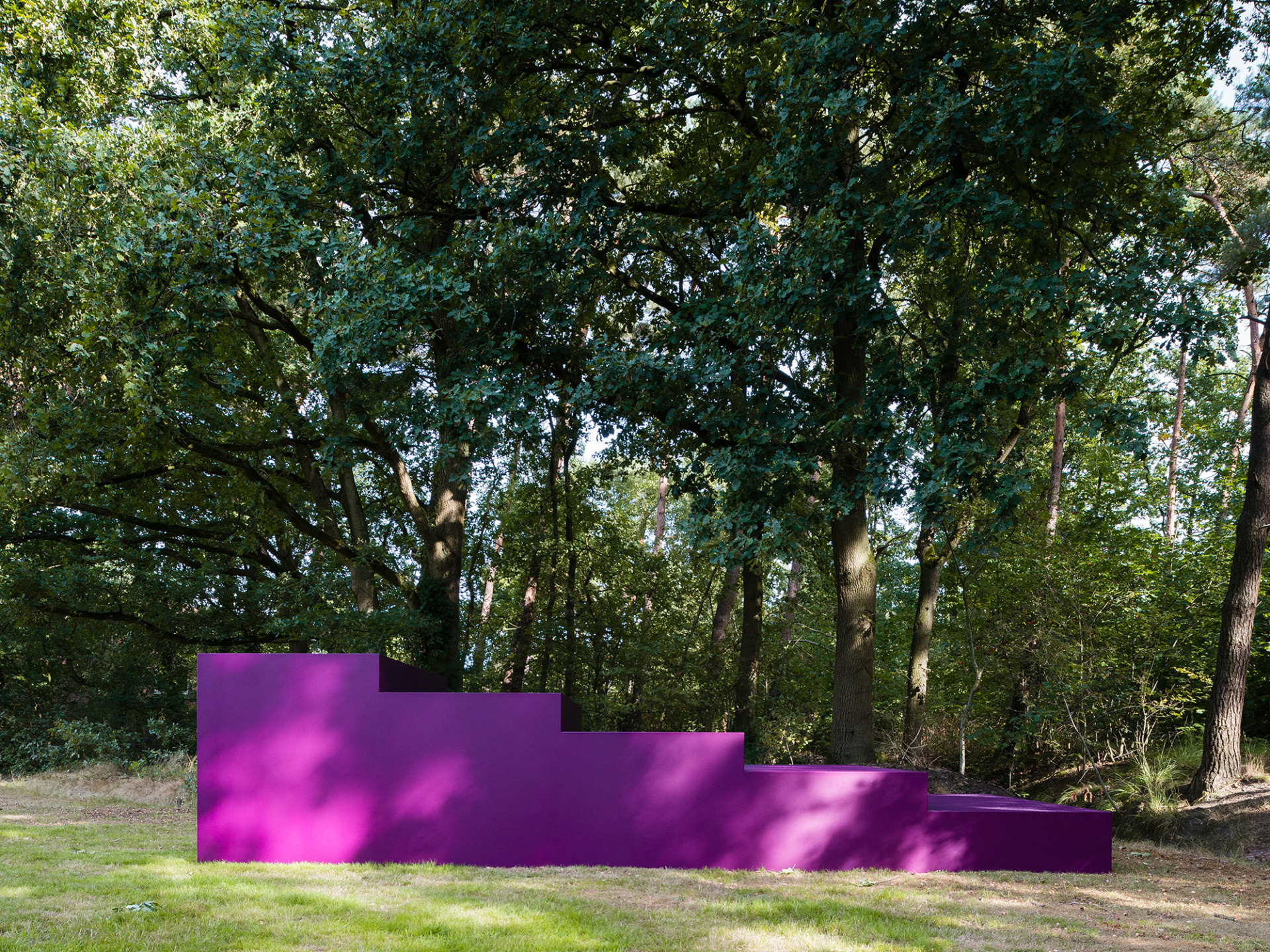
The third landscape object, The Stairs, functions both as a stepped landscape intervention and as a viewing platform. Oriented towards the Kempens Plateau—where much of the area’s natural water originates—it is positioned within an open cornfield. During certain seasons, the object becomes partially enveloped by tall corn plants, reinforcing its dialogue with the surrounding agricultural landscape.
Retie, Antwerp, Belgium
2018-2019
Completed
Municipality of Retie
Serge Schoemaker, Alexander Beeloo | Max Hart Nibbrig, Sanne Knoll, Valentine Jaques
Max Hart Nibbrig


Retie, Antwerp, Belgium
2018-2019
Completed
Municipality of Retie
Serge Schoemaker, Alexander Beeloo | Max Hart Nibbrig, Sanne Knoll, Valentine Jaques
Max Hart Nibbrig